
In brief
Understanding the World in EYFS guides children to explore their physical world and community through observation, curiosity, and first-hand experience. By the end of Reception, children are expected to meet three Early Learning Goals: Past and Present; People, Culture and Communities; and The Natural World.
Understanding the World is one of the specific areas of the seven areas of learning. It covers how children begin to make sense of the physical world around them, the people and communities they belong to, and the natural environment they live in.
If that sounds broad, that’s because it is. But that breadth is the point. This area of learning is where science, history, geography, culture, and technology all begin, long before those subjects even have names.
For practitioners, it can be hard to report on a child’s progress on Understanding the World, because of how broad it is. This guide is designed to help you better understand this area, and make it a core consideration when feeding back to parents.
What does Understanding the World cover in the EYFS?
According to the DfE’s EYFS statutory framework, Understanding the World “involves guiding children to make sense of their physical world and their community.” The frequency and range of children’s personal experiences, from visiting parks and libraries to meeting police officers and nurses, all build their knowledge and vocabulary across this area.
The revised EYFS framework organises Understanding the World around three Early Learning Goals (ELGs):
| ELG | What children should be able to do by end of Reception |
| Past and Present | Talk about the lives of people around them, know some similarities and differences between things in the past and now, and understand the past through stories and storytelling |
| People, Culture and Communities | Describe their immediate environment, know some similarities and differences between religious and cultural communities in this country, and explain differences between life here and in other countries |
| The Natural World | Explore the natural world, make observations, draw pictures of animals and plants, and understand some important processes including the seasons and changing states of matter |
It’s worth noting that the older three-part structure (the world, people and communities, and technology) appeared in earlier versions of Development Matters. The current framework uses the ELG language above. Technology is still relevant as a vehicle for learning, but it is no longer a standalone assessment goal.
Here’s the practical implication of this: your planning and observations should reference these three ELGs, not the older headings.
Understanding the World EYFS examples
Knowing what the ELGs say is one thing. Recognising them in daily practice is another. Here are concrete examples of what Understanding the World looks like across the three goals, from birth through to Reception.
Past and Present
- A toddler looks at photos of themselves as a baby and says “that’s me when I was little”
- A three-year-old notices that the tree in the garden looks different from when they planted it in autumn
- A Reception child compares how people travelled in the past with how their family travels now, using a non-fiction book as a prompt
- Children bring in family photos for a “then and now” display and talk about what has changed
What to observe: Language like “before,” “used to,” “when I was a baby,” or “it changed because.” These show children building a sense of time and personal history.
People, Culture and Communities
- A child describes their home and compares it to a friend’s, noticing similarities and differences
- Children interact with festivals and celebrations of different cultures, such as Diwali or Eid, and discuss how their family celebrates differently
- A practitioner reads a story set in another country, and children identify what looks the same and what looks different from their own lives
- Children draw a map of their journey to nursery and name familiar landmarks along the route
What to observe: Children making comparisons unprompted, asking questions about other people’s lives, or using vocabulary from stories and non-fiction to describe their environment.
The Natural World
- A child plants a seed, waters it regularly, and describes what they notice each week
- Children on a nature walk collect leaves and sort them by shape, size, or colour
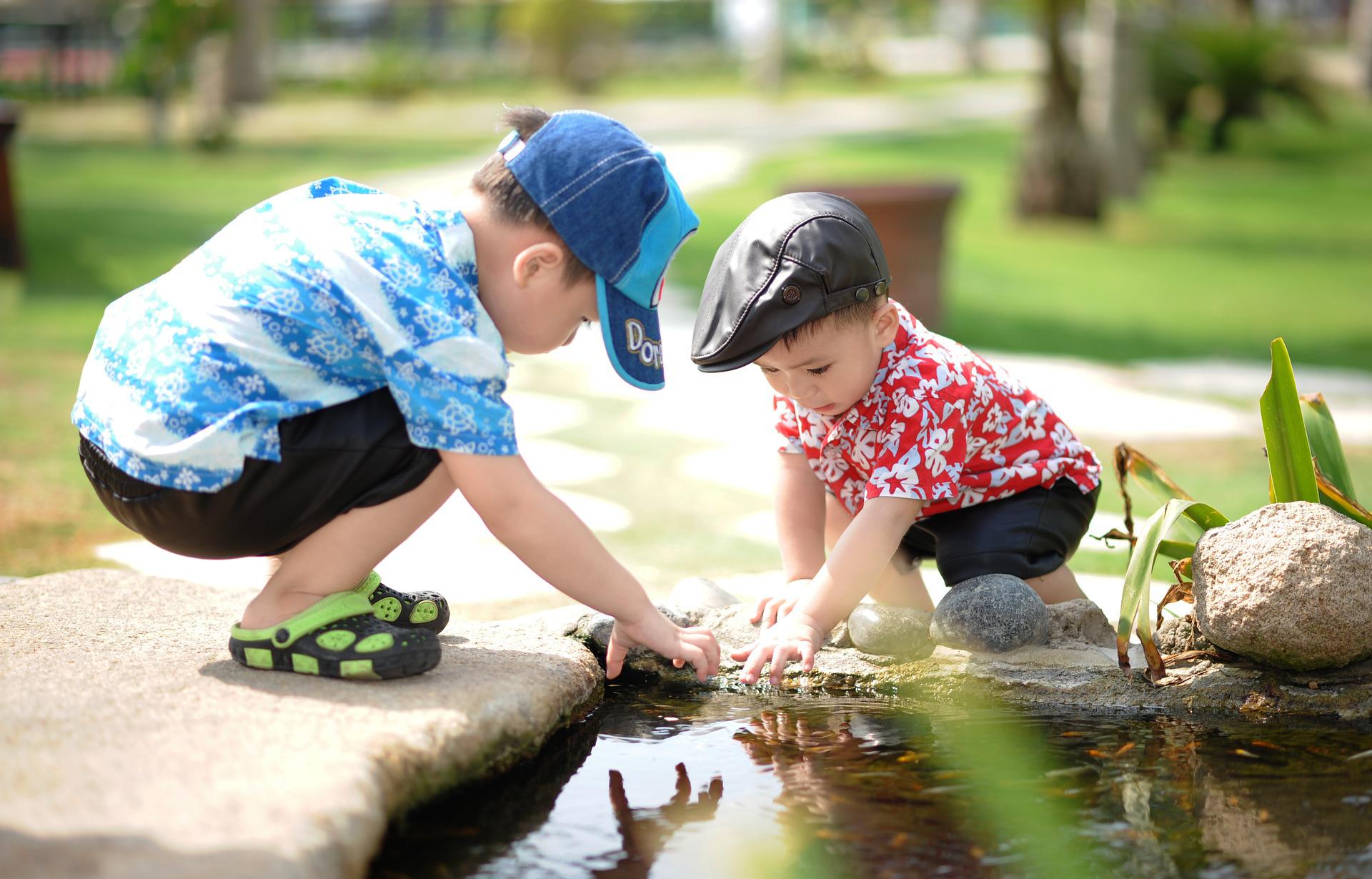
- A two-year-old splashes in a puddle and notices that the water moves when they stamp
- Reception children observe ice melting and predict what will happen if it’s left in the sun
What to observe: Children making predictions, noticing change, asking “why” questions, and using new vocabulary like “dissolve,” “freeze,” or “habitat.”
Understanding the World examples do not need to be elaborate. The most observable moments often happen during free flow, outdoor play, and everyday routines. Your job is to notice them, name the learning, and record it.
Understanding the World EYFS activities
The best Understanding the World EYFS activities are hands-on, open-ended, and rooted in real experience. Children learn this area most effectively by doing, not by being told. Below are practical activities mapped to each ELG, suitable for nursery and Reception settings.
Activities for Past and Present
- “All about me” timelines – ask families to share photos from birth to now. Children sequence them and talk about what has changed. This works well as a birthday activity or at the start of a new term.
- Then and now comparisons – use simple non-fiction books or printed images to compare everyday objects from the past (old telephones, prams, vehicles) with their modern equivalents.
- Story-based history – choose picture books set in the past and use them as discussion starters. Ask: “What’s the same as your life? What’s different?”
Activities for People, Culture and Communities
- Cultural celebration days – mark festivals such as Diwali, Eid, Hanukkah, Chinese New Year, and Bonfire Night with crafts, food tasting, and discussion. Keep it ongoing rather than one-off.
- Community visitor sessions – invite local community helpers (firefighters, librarians, shop owners) to talk about their roles. Children can prepare questions in advance.
- Map making – draw simple maps of the nursery, the garden, or the route from the gate to the door. Older children can extend this to their journey from home.
Activities for The Natural World
- Seasonal nature walks – go outside in every season and look for change. Collect natural materials, observe insects, notice what has grown or disappeared. Outdoor exploration in early years is one of the most reliable ways to generate rich Understanding the World observations.
- Grow your own – plant seeds, bulbs, or vegetables and track growth over weeks. Introduce vocabulary like “roots,” “stem,” “germinate,” and “life cycle.”
- Simple science experiments – mixing colours, making ice and watching it melt, floating and sinking, or a bicarbonate of soda and vinegar reaction. These build early scientific thinking through prediction and observation.
- Weather charts – a daily weather record encourages children to observe, describe, and compare conditions over time.
A useful principle: plan the environment and the provocation, then step back. The richest Understanding the World learning often happens when children are given time, space, and the right vocabulary to explore independently.
How Understanding the World connects to British values
Understanding the World and British values are not separate requirements. They overlap naturally, and recognising that overlap makes both easier to plan for and evidence.
The People, Culture and Communities ELG is the clearest connection point. When children explore different religions, family structures, and cultural traditions, they are building mutual respect and tolerance – two of the core British values. When they take part in group decisions about activities or rules, they are experiencing democracy in an age-appropriate way.
Where the overlap is strongest:
- Exploring similarities and differences between communities supports mutual respect and tolerance
- Learning about community roles (police, nurses, firefighters) supports the rule of law
- “All about me” projects and free choice in play support individual liberty
- Group discussions, voting on activities, and collaborative projects support democracy
For a full breakdown of how to plan and evidence British values across your setting, see our guide to promoting British values in early years.
What strong observations look like in this area
Understanding the World is one of the areas where practitioners sometimes struggle to capture observations confidently. The learning can feel invisible because it happens in conversation, in play, and in small moments of curiosity rather than in a finished piece of work.
Strong observations in this area tend to include:
- A specific moment: what the child said, did, or asked
- The ELG it relates to: Past and Present, People, Culture and Communities, or The Natural World
- The vocabulary the child used: this is particularly important for demonstrating progress over time
- A next step: what you might offer next to extend the learning
For example:
“During the nature walk, Amara picked up a fallen leaf and said ‘it went brown because it’s cold now.’ She compared it to the green leaves still on the tree and asked if they would fall too. (The Natural World – observing change in the environment. Next step: introduce vocabulary around seasonal change and deciduous trees.)”
That is a complete, evidence-based observation. It does not need to be long. It needs to be specific.
How eylog supports Understanding the World observations
The hardest part of capturing this area is the timing. A child’s comment about a fallen leaf or a question about why puddles disappear happens in the moment, and if you’re not able to record it straight away, the detail is lost.
eylog is built around that reality. Practitioners can capture observations on the go using photos, video, or a quick typed note, and tag them directly to the relevant EYFS area, including all three Understanding the World ELGs. The offline mode means you can record during outdoor play or a nature walk and sync when you’re back inside.
Once captured, eylog lets you add a next step, build a clear picture of progress over time, and share updates with families through the eyparent app. Parents can even add their own home observations, which is particularly useful for this area, where so much of the learning happens outside the setting.
Capture the learning as it happens
Understanding the World moments happen quickly. A child’s unprompted question about why leaves fall, a comparison they make between their family and a friend’s, a prediction during a science experiment – these are the observations that build a clear picture of progress over time.
eyworks helps settings capture those moments on the go, link them to EYFS areas, including all three Understanding the World ELGs, and share progress with families without the paperwork burden. If you want to see how it works in practice, book a free demo, and we’ll walk you through it.