

In brief
Ofsted inspectors look at your setting through five lenses. These are Quality of education, Behaviour and attitudes, Personal development, Leadership and management, and Safeguarding. We created these questions by studying these key themes. When you discuss the quality of education, use the framework of intent, implementation, and impact. This keeps your answers clear and precise. You must be able to explain the “why” behind your teaching methods and daily activities. This shows that your team makes purposeful choices to support every child. Using a system like eyworks gives you unshakeable clarity. It organises your evidence so you are ready for an inspection every single day.
Even in settings with strong practice and solid safeguarding, it’s natural to feel uncertain about what inspectors will ask and how your team should respond. The key isn’t memorising perfect answers. It’s about understanding what inspectors are looking for and helping your team articulate the rationale behind your daily decisions. Because that’s what really matters: showing you know your children, your curriculum, and your responsibilities.
In this guide, we’ve identified 10 questions inspectors commonly ask during nursery inspections. For each question, we’ll explain what they’re really assessing and what a strong response looks like. By the end, you’ll have a clearer picture of how to prepare your team with confidence, not anxiety.
How we came up with these questions
Ofsted doesn’t publish an official question bank for nursery inspections, and that’s fair. Doing so would undermine the integrity of the inspection process. However, Ofsted’s early years Inspection Handbook clearly sets out the themes and areas that inspectors focus on during inspections. By studying these themes closely, we can anticipate the types of questions inspectors are likely to ask.
We’ve developed this guide around these themes. We’ve also used the EYFS Framework and the Education Inspection Framework to inform our questions. While the questions in this guide are built around the core themes Ofsted has always valued, the way you are graded has changed significantly. You can read more about that in our 2026 updates to the Ofsted inspection framework.
Understanding Ofsted inspections
Before we look at example questions, it’s helpful to establish some context around the Ofsted inspection process for early years. We’ll briefly cover how often nurseries are inspected, the core purpose of the inspection, and the broad structure you can expect. Understanding this foundation makes it easier to anticipate and address the questions you might receive.
What is the purpose of an Ofsted inspection?
Ofsted inspections are designed to assess the overall quality of early years education and childcare provision. For nurseries, the priority goes beyond achieving a rating; it’s about making sure children are cared for in a safe environment and receive high‑quality education.
During inspections, Ofsted looks at 5 key themes:
- Quality of education
- Behaviour and attitudes
- Personal development
- Leadership and management
- Safeguarding
With these themes in mind, it’s useful to know how the inspection process works in practice:
How does an Ofsted inspection work?
During an Ofsted inspection, inspectors observe nursery practices, engage in discussions with staff, and review documentation. They may also speak with leadership, practitioners, and occasionally parents to better understand how the nursery operates. Inspectors focus on evaluating daily practices rather than staged or rehearsed activities, ensuring that the inspection reflects the true quality of care being provided.
Potential Ofsted questions about the EYFS curriculum
Ofsted places great importance on the curriculum and its implementation within early years settings. Inspectors will assess how your curriculum is planned and delivered, and whether it meets the needs of all children in your care. The curriculum is not just a checklist of activities but a carefully thought-out framework that fosters children’s holistic development.
The curriculum should cover all 7 areas of learning in the EYFS Framework and should be designed to allow children to develop knowledge and skills progressively throughout their time in the nursery. Inspectors will want assurance that your curriculum is dynamic, inclusive, and flexible to meet the needs of every child.
Key areas Ofsted will focus on:
- Curriculum intent: What children are expected to learn.
- Inclusivity: How the curriculum meets the needs of all children, including those with SEND.
- Assessment and monitoring: How children’s progress is tracked, and how this informs future teaching.
Here are some sample questions they may ask:
Q1. What do you intend children to learn through your EYFS curriculum?
This question revolves around curriculum intent, one of the key pillars of the Ofsted inspection framework. Inspectors want to understand the rationale behind your curriculum:
What do you aim for children to learn by the time they leave your setting?
This question encourages nurseries to articulate the goals behind their teaching methods and activities, showing how the curriculum supports children’s overall development.
Inspectors are particularly interested in:
- Your understanding of the EYFS framework and how it is applied.
- Evidence of long-term planning that outlines the progression of learning over time.
- How your curriculum supports all seven areas of learning and development in EYFS?
How to answer
When answering, demonstrate how your curriculum aligns with the seven areas of learning in the EYFS. Provide specific examples of activities or strategies used to promote these areas and explain how learning builds progressively across a child’s time at your nursery.
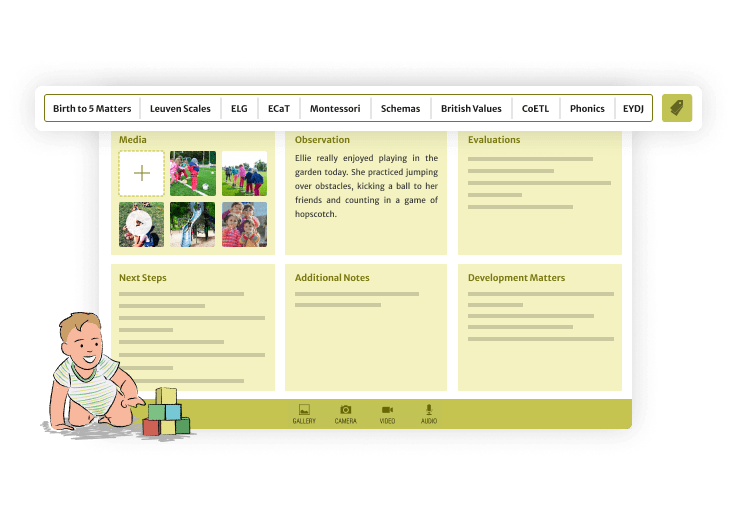
By using eylog online learning journals, you can easily record daily activities and link them to the seven areas of learning. It gives you verifiable proof to share with inspectors and better demonstrates your commitment to this framework.
Q2. How does your EYFS curriculum meet the needs of all children?
Ofsted places significant emphasis on the inclusivity of the curriculum and how well it meets the diverse needs of all children. Inspectors will focus on how well your curriculum supports children with SEND, particularly in light of the new SEND reforms, and how it meets the needs of children from different cultural backgrounds and at different stages of development. They will also assess how the learning environment is designed to ensure that every child has the opportunity to engage with and benefit from the curriculum.
Inspectors will focus on:
- How the curriculum accommodates the needs of children with SEND.
- Evidence of differentiated learning experiences and strategies tailored to children’s diverse needs.
- How the environment fosters inclusivity and supports the individual needs of all children.
How to Answer
When answering this question, explain how your curriculum is designed to be flexible and adaptable. Highlight how you provide a variety of learning experiences that can be tailored to individual needs. Discuss strategies such as differentiated activities, sensory support for children with SEND, and the use of visual aids for non-native speakers. Provide specific examples that demonstrate how your curriculum is inclusive and ensures that all children, regardless of their background or ability, can access learning.
Q3. How do you track and monitor children’s progress?
Tracking and monitoring children’s progress is essential for ensuring that your curriculum is effectively supporting children’s learning and development. Inspectors will want to know that you have a systematic approach to assessing children’s progress, identifying any areas where additional support might be needed, and adjusting teaching methods accordingly.
Inspectors will focus on:
- Clear systems for recording and tracking children’s development.
- How observations, assessments, and feedback from parents are used to inform teaching.
- Evidence of how progress data informs planning for both individual children and groups.
How to answer
When responding, explain the tools or systems you use to track and report on children’s progress, such as eylog for daily tracking and 2 way observations, or eyparent for reporting that to parents and guardians. With eyparent, you can easily send next steps and create a transparent narrative of child development.
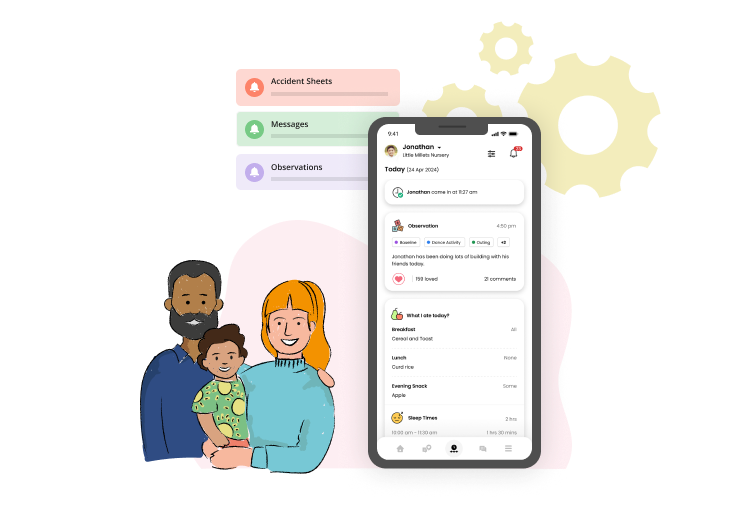
Provide examples of how you use this data to plan for individual children or groups. Highlight how you involve parents in monitoring progress through regular updates and discussions.
Potential Ofsted questions about safeguarding
Safeguarding is one of the most critical elements of an Ofsted inspection, as it ensures the safety and well-being of the children in your care. Ofsted will assess how well your nursery implements safeguarding policies and practices to protect children from harm, including protecting your online data. Safeguarding is not just about policies; it’s about creating a culture of safety where all staff are aware of their safeguarding responsibilities and can act swiftly if concerns arise.
Inspectors will focus on:
- Safeguarding procedures: Clear procedures for reporting concerns, training, and staff understanding of their responsibilities.
- Staff training: Ensuring all staff are adequately trained and aware of safeguarding procedures.
- Safe environment: How you ensure children are kept safe while in your care, including risk assessments and daily safety protocols.
Q4. What safeguarding procedures are in place in your nursery?
This question focuses on your safeguarding policies and procedures and on how they are implemented across your nursery. Inspectors will want to see that safeguarding is a top priority and that your policies are clear, comprehensive, and accessible to staff.
Inspectors will focus on:
- A documented, clear safeguarding policy.
- How this policy is communicated and understood by staff.
- The role of the Designated Safeguarding Lead (DSL) and the procedures for reporting concerns.
How to answer
Describe your safeguarding policy and explain how it is communicated to staff. Discuss how the policy is regularly reviewed and updated, and outline how staff are trained to identify, report, and address any safeguarding concerns. Be prepared to explain any specific procedures your nursery has in place, such as regular safeguarding audits or links with local safeguarding authorities.
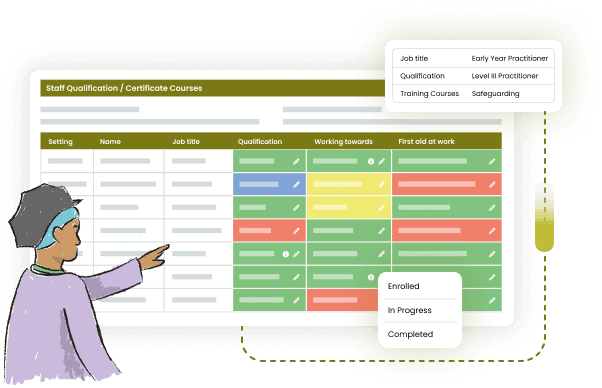
To better manage safeguarding training and documentation, eypeople allows you to easily assign training and qualifications to ensure safeguarding standards are maintained.
Q5. How do you keep children safe in your setting?
Inspectors want to understand the practical steps your nursery takes to maintain a safe environment. They will be assessing how well your nursery handles risk assessments, staff supervision, and incident reporting to ensure children’s safety at all times.
Inspectors will focus on:
- How risk assessments are carried out and how regularly they are reviewed.
- How incidents are reported and managed.
- Specific safety measures in place, such as visitor management, emergency procedures, and safeguarding training.
How to answer
In your response, discuss the procedures you have in place to ensure a safe environment for children. Talk about how you carry out regular risk assessments, both indoors and outdoors, and how you ensure the nursery complies with all health and safety regulations. Describe how you manage visitors, emergency procedures (e.g., fire drills), and staff training for handling safety issues, highlighting how your team is trained to identify potential risks.
Potential Ofsted questions about behaviour and attitudes
Behaviour and attitudes shape a child’s development and contribute to creating a positive and supportive learning environment. Inspectors will assess whether children exhibit positive behaviour, self-regulation, and emotional maturity. This theme also explores how your nursery fosters respect, responsibility, and kindness by implementing the British Values in EYFS, helping children understand the expectations for their actions.
Inspectors will focus on:
- Behaviour management: Clear behaviour expectations and consistent responses from staff.
- Emotional development: Strategies for promoting emotional regulation and positive self-behaviour.
- Social development: How children learn to interact positively with peers and adults.
Q6. What are your expectations of behaviour in your setting?
Inspectors will explore how you manage and promote positive behaviour across the nursery. They will look for age-appropriate behaviour expectations and how these are communicated to children.
Inspectors will focus on:
- Clear and consistent behaviour expectations.
- How behaviour management is applied across all age groups.
- How you promote emotional development and self-regulation.
How to answer
When answering, explain your approach to behaviour management and how you promote positive behaviour by setting consistent expectations and providing support. Detail how staff implement the behaviour policy and provide specific examples of how you encourage good behaviour and conflict resolution among children. Show that your policy is supportive and teaches children how to express themselves positively, while also addressing how you support mental health within nursery settings that could contribute to behaviour problems.
Q7. How do you promote self-regulation in young children?
Self-regulation is essential for children’s emotional and social development. Inspectors will be interested in how your nursery helps children develop the ability to control their emotions, thoughts, and behaviours, especially in social situations.
Inspectors will focus on:
- How emotional regulation is taught through routines and activities.
- How staff model self-regulation and guide children through challenges.
- The strategies used to help children develop self-awareness and emotional control.
How to answer
In your answer, explain how your nursery uses structured routines, supportive activities, and staff modelling to help children regulate their emotions. Discuss specific strategies, such as mindfulness exercises, role-playing, or calming spaces, that help children control their emotions. Emphasise how your staff actively guide children in identifying and managing their feelings, fostering a supportive emotional environment.
Potential Ofsted questions on personal development
Ofsted places a strong emphasis on children’s personal development, as it’s a fundamental part of their growth into well-rounded individuals and school readiness. Inspectors will assess how nurseries foster respect for diversity, promote understanding of others, and develop children’s social and emotional skills, while reinforcing their role in the community through community-based activities. This includes helping children learn about differences and celebrate diversity, while supporting their development of self-esteem, confidence, and emotional maturity.
Inspectors will focus on:
- Respect for diversity: Promoting understanding and respect for differences.
- Cultural capital: Providing children with experiences that broaden their understanding of the world.
- Social development: Supporting children in building positive relationships with others.
Q8. How do you teach children to respect and celebrate differences?
Promoting respect for diversity and celebrating differences is central to a child’s development, and Ofsted inspectors will be looking closely at how your nursery creates an environment that teaches children to value and respect people of all backgrounds. Inspectors will assess how well your curriculum, activities, and everyday interactions reflect and embrace diversity.
Inspectors will focus on:
- How you introduce children to different cultures, backgrounds, and ways of life.
- The resources, activities, and discussions used to promote inclusivity.
- How children are encouraged to value differences among their peers and in the wider world.
How to answer
When answering, describe how your curriculum and daily activities incorporate discussions about diversity and inclusivity. This might include books, music, activities, or celebrations from a wide range of cultures, as well as creating an environment that reflects different backgrounds, abilities, and experiences. Explain how you actively teach children to respect and appreciate others through these materials, as well as through direct conversation and activities designed to celebrate differences. Mention how your nursery encourages children to express their thoughts and feelings about diversity and teaches them to be kind and respectful to all.
It can also be important to detail how you encourage this through parent partnership, so that these values are translated into the home. With eyparent, you can help develop a strong nursery-parent partnership to better strengthen your teachings.

Potential Ofsted questions on nursery leadership and management
Strong leadership and effective management underpin the quality of education and care in any setting. Inspectors will evaluate the leadership team’s ability to manage resources, staff, and operations efficiently. They’ll assess how well the team communicates, supports staff development, and ensures the nursery meets all legal requirements and standards.
Inspectors will focus on:
- Organisational structure: Clear leadership and management processes that support high-quality care and education.
- Staff support & development: How leadership supports professional development and promotes staff wellbeing.
- Quality assurance: The nursery’s commitment to maintaining high standards through self-evaluation and improvement plans.
Here are a couple of questions you may face that encompass all these points.
Q9. How is your nursery provision organised?
This question explores the structure of your nursery, how it is managed, and how this structure contributes to providing consistent, high-quality care and education.
Inspectors want to understand how your leadership is organised and how it affects the setting’s effectiveness.
Inspectors will focus on:
- The clarity of the leadership structure and management processes.
- How effectively the management supports the team and ensures smooth operations.
- The systems are in place to ensure consistent, high-quality care and education.
How to answer
When answering, outline your nursery’s leadership structure, highlighting key roles and responsibilities. Discuss how management ensures that staff are supported and that the nursery runs efficiently. Mention any systems or processes in place to maintain high standards, such as regular team meetings, clear communication, and effective task delegation.
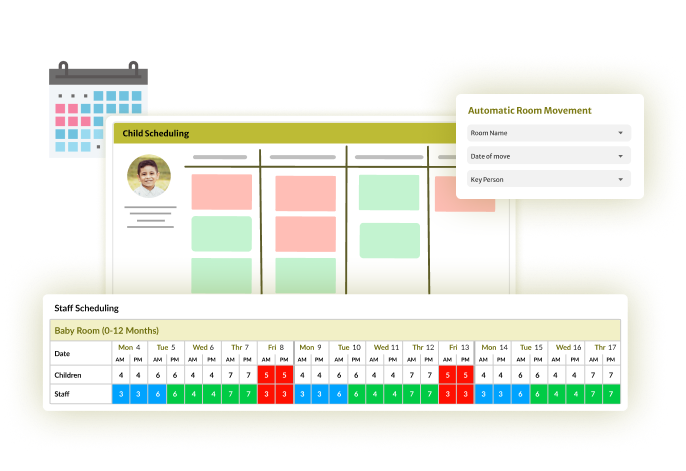
With this question, the inspector is looking for the ‘why’ behind your process and systems. This is where a nursery management software can turn operational data into unshakeable clarity. For example, a tool like eymanage gives you a unified view of your occupancy and staff-to-child ratios, showing the inspector that your setting is run with precision, not guesswork. You don’t have to trawl through spreadsheets or wade through paperwork.
10. How do you support staff development and wellbeing?
Strong leadership is crucial in ensuring staff development and promoting overall staff wellbeing within the setting. Inspectors want to know how staff are professionally and emotionally supported, and whether you provide opportunities for growth and career progression.
Inspectors will focus on:
- The professional development opportunities provided to staff.
- How you support staff wellbeing, both through training and personal support.
- The impact of staff development on the quality of care and education provided.
How to answer
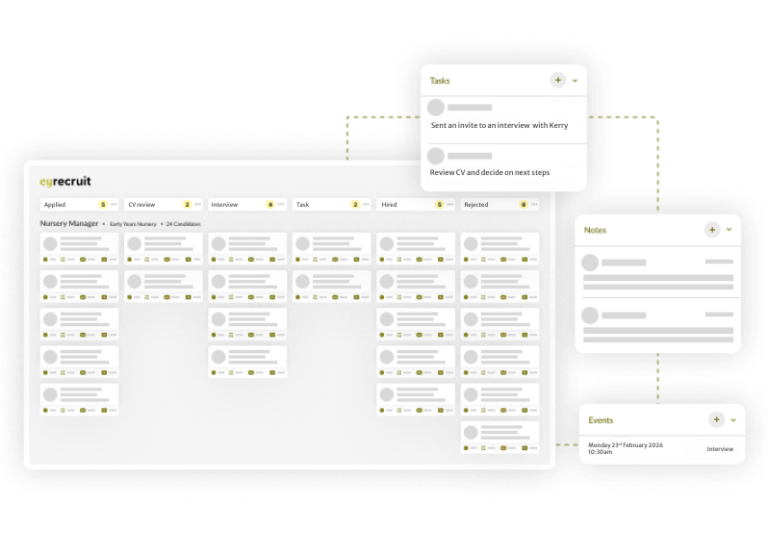
Ofsted wants to see that you’re investing in your team’s growth. So explain the professional development opportunities you offer staff and how these support their ongoing growth. Show the systems you have in place to manage the entire employee lifecycle, from recruitment to retention. Tools like eyrecruit help you find the right talent to solve the staffing crisis, while eypeople tracks ongoing CPD and wellbeing. Highlight employee wellbeing initiatives like regular check-ins, access to resources, or stress management support. Emphasise how strong leadership contributes to staff retention and morale, and how your efforts to develop and support staff contribute to the overall success of the nursery.
Put your best foot forward with eyworks
While the thought of an inspection can trigger alarm, it shouldn’t change how you lead your setting. Preparation isn’t about memorising scripts or performing for a day. It’s about building robust systems, supporting a confident team, and maintaining a presence-first mindset every single day.
Ofsted isn’t looking for a rehearsed performance. They are looking for the ‘why’ behind your decisions. Show them how your curriculum, safeguarding, and leadership support every child’s unique journey.
At eyworks,our goal is to help you build a resilient, thriving setting. By automating the ratios, rotas, and regulations, we give you the time to focus on what matters most: leading your team and changing children’s lives. When the inspector arrives, you won’t be scrambling for paperwork. You’ll be ready to show them the high standards you and your team deliver every day.