
In brief:
This blog post summarises our key takeaways from the Nursery Management Show, where our Head of Growth, Tim Taylor, chaired a vital discussion on Parent Relations.
- Reinstate in-room drop-offs to rebuild post-COVID parent connections
- Implement realistic alternatives to home visits when resources are stretched
- Train staff to handle parent communications with confidence and professionalism
- Target collection times for meaningful conversations rather than rushed morning exchanges
- Use technology for logistics to free up face-to-face time for relationship building
The energy at ExCeL London last Friday was palpable. Between the bustling networking in the Knowledge Hub, high-level strategy sessions, and the nostalgia of East 17 closing the show, the Nursery Management Show 2025 reminded us why this sector is so special: it’s built on community.
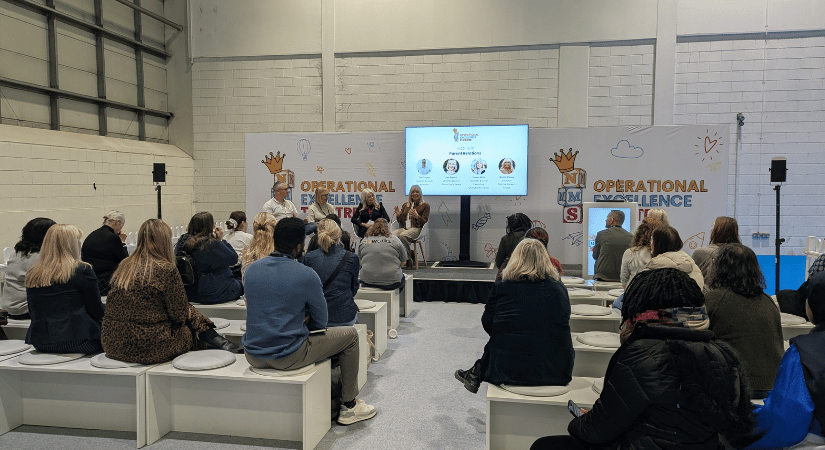
There were many notable speakers and interesting panel discussions, but we spent our afternoon in the Operational Excellence Theatre, where our Head of Growth, Tim Taylor, chaired a vital discussion on Parent Relations.
Tim was joined by three sector thought leaders: Zoe Raven (Acorn Early Years), Susan Mills (Cherubs Nurseries), and Nicola Fleury MBE (Kidzrus). The conversation wasn’t about high-level theory; it was about the daily reality of building trust with families.
For those of you who haven’t attended the event before, the Nursery Management Show is one of the standout dates in the early years calendar. Organised by Nursery Management Today (NMT) magazine and its parent company, Nexus Media Group, it’s one of the UK’s largest events dedicated to early years management and leadership.
The primary goal of the event is to unite the early years sector for professional development, networking, and discussions around current issues.
It’s a rare opportunity to step away from the setting, earn accredited CPD, and network with peers who understand exactly what it takes to run a nursery business in 2025. This year’s event, held at ExCeL London, was no exception.
Here is what we learned from the panel about moving parent partnerships from a transactional to a relational model.
1. Transparency is the Foundation of Trust
One of the most significant challenges discussed was the friction around fees and funding. The panel agreed that honesty is the only policy. Parents often don’t understand how funding works—or that it rarely covers the nursery’s actual costs.
The consensus? Don’t hide the reality. Being open about funding structures and invoices helps parents value the service you provide. As the panel noted, parents appreciate the transparency, and it shifts the conversation from a commercial transaction to a shared understanding of the nursery’s value.
2. Rethinking the “Open Door”
A fascinating point raised was the post-COVID shift in drop-offs. During the pandemic, “doorstep drop-offs” became the norm. While operationally simpler for staff, the panel noted a drift in connection.
All three panellists recommended allowing parents back into the rooms for drop-offs. Why? Because it encourages parents to step into the child’s world. Creating spaces like coffee stations at the entrance invites conversation that isn’t just “here is the bag, bye.” It turns a logistical handover into a relationship-building moment.
3. The Evolution of Home Visits
While the panel recommended home visits as the gold standard for building relationships, they also recognised that they can be a logistical nightmare when you’re short-staffed. Here are some of the realistic alternatives suggested:
- Offsite meetings: Meeting in neutral community spaces or local play areas if a home visit isn’t feasible.
- Quiet times: Schedule visits on quieter days, like Fridays, to manage rotas better.
- The “Dad” factor: Nicola Fleury, Director, Kidzrus Private Day Nursery, shared how they introduced “Dad groups” and weekend sessions. Since mums often handle the daily drop-off, these sessions ensure fathers and other carers feel part of the nursery community, not just bystanders.
4. Empowering your team
Your practitioners are on the front line of parent communication. The panel discussed the importance of training staff to distinguish between queries they can answer and those that require a manager.
It’s about confidence. Whether it’s explaining a biting incident, which can cause anxiety for a parent but is routine for a practitioner, or handling a funding query, staff need the skills to listen, validate the parent’s feelings, and respond professionally to reassure them effectively.
- The “quiet time” catch-up
The morning drop-off is often a race against the clock. The panel highlighted that trying to force a meaningful conversation when a parent is worrying about being late for work is often counterproductive.
Instead, target the collection time. Parents are often less pressured at the end of the day, making them more open to a genuine chat rather than a transactional handover. By using your software for the logistical updates (nappies, meals, sleep times), you clear the airwaves so that face-to-face time can be used for connection, not just compliance.
The Verdict
The key takeaway from Tim and the panel was clear: Parent engagement isn’t an admin task, it’s a retention strategy.
At eyworks, we build software to handle the rotas, the invoices, and the headcount so you have the time to handle the humans. Because, as the panel proved, no app can replace a genuine conversation at the door.