

In brief
- View newsletters as engagement drivers, not admin. Strong parental involvement in early years can add the equivalent of five additional months of learning progress.
- Balance practical updates with positive stories. Pair key dates and reminders with room highlights, EYFS learning themes, and simple home-learning ideas.
- Keep formatting clear and scannable. Use short sections, bullet points, and plain language so busy parents can digest updates quickly on mobile devices.
- Stick to a predictable schedule. Consistent delivery—whether weekly or monthly—builds trust and reduces repeated questions from families.
- Combine broad newsletters with targeted updates. Use tools like eyengage or eyparent to send room-specific messages and prevent parent digital fatigue.
A good nursery newsletter does more than share dates and notices. It gives families a feel for the life of your setting, celebrates children’s experiences and supports stronger communication between home and your nursery setting.
When done well, a nursery newsletter helps families feel informed, involved and connected to their child’s day-to-day experiences. It gives parents a simple way to understand what’s happening in the nursery, what their child is learning and how they can continue supporting development outside nursery grounds.
This matters because parent engagement plays an important role in children’s learning. The Education Endowment Foundation says parental engagement in early years education is consistently linked to children’s later academic success. Evaluated parental engagement programmes have shown an average positive impact equivalent to five additional months’ of progress over a year.
That means newsletters shouldn’t be seen as simple admin updates. They can be a valuable part of building stronger parent partnerships, supporting home learning and helping families feel more connected to their child’s early years journey.
This guide covers the value of nursery newsletters, what a good nursery newsletter looks like, what to include, and a simple nursery newsletter template checklist you can adapt for your setting.
Why do you need a nursery newsletter?
Nurseries aren’t legally required to send a newsletter, but it can be a valuable communication tool to build stronger relationships with parents and carers.
A newsletter helps keep families informed about dates, events, reminders, learning themes and nursery updates. Instead of information being shared across several different conversations, noticeboards or messages, parents have one regular place to find what they need.
This can also reduce repeated questions from parents. When key information is shared clearly, families are less likely to miss dates, forget forms or feel unsure about what is happening in the setting.
Newsletters and newsfeeds can strengthen parent engagement. By sharing home-learning ideas, child development tips and simple ways for families to get involved, nurseries can help parents feel more connected to their child’s learning.
They can be especially useful for nurseries that want to improve consistency across rooms, teams or multiple sites. A regular format helps make sure all families receive the same quality of communication, whether their child is in the baby room, toddler room or preschool.
A nursery newsletter can also support marketing and help promote a nursery. It gives families a feel for the setting’s personality, values and approach to early years care. When newsletters celebrate children’s experiences and show the warmth of the nursery community, they help reinforce why parents chose the setting in the first place.
How can a nursery newsletter support parent communication?
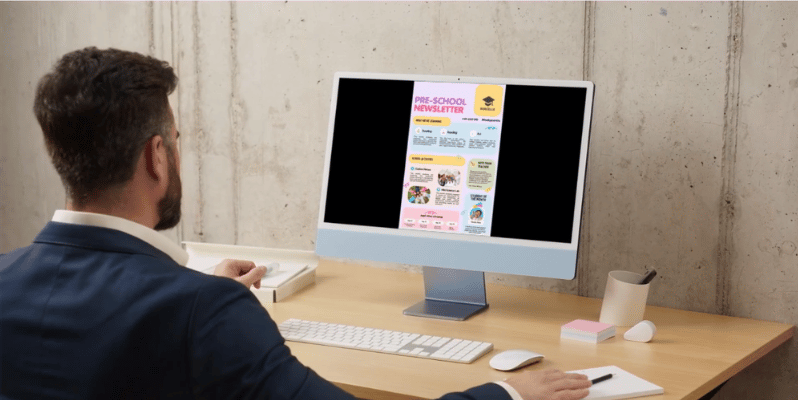
A nursery newsletter creates a regular touchpoint between the nursery and families.
Drop-off and pick-up times can be busy. Parents may only have a few minutes to speak to practitioners, and not every update can be shared in person. A newsletter gives nurseries a reliable way to communicate important information, while helping parents understand what is happening across the setting.
It can also make communication feel more consistent across different rooms and age groups. Instead of each room sharing updates in a different way, a newsletter brings everything together in a clear and familiar format.
Newsletters can also encourage two-way communication. For example, nurseries can invite families to share:
- Photos from home
- Cultural celebrations
- Favourite books
- Family traditions
- Children’s current interests
- Weekend experiences
- Ideas linked to upcoming topics
These prompts help parents feel included and give practitioners valuable insight into children’s lives outside nursery.
A newsletter can also help parents feel more confident supporting learning at home. When families understand what their child has been exploring, they can continue conversations, activities and routines in a natural way.
For nurseries using parent communication tools, platforms such as eyparent or eyengage can help make this process even easier. Rather than relying on paper updates or separate messages, nurseries can share information, learning updates and parent communications in a more connected way.
What does a good nursery newsletter look like?
A good nursery newsletter should be clear, useful, and easy to scan.
Parents are often busy, so the best newsletters are quick to read, but detailed enough to answer common questions. They should help families find the information they need without having to search through endless paragraphs of text.
A strong nursery newsletter should include:
- Clear headings
- Short sections
- Bullet points for key reminders
- Photos or activity highlights, where permissions allow
- A consistent format from one newsletter to the next
- Simple next steps for parents and carers
Use a warm, professional and reassuring tone. Parents should feel informed, confident and included, without being overloaded with information.
Every newsletter should also have a clear purpose. For example, you may be sharing monthly updates, preparing parents for upcoming events, reminding families about important dates or offering home-learning ideas linked to current curriculum activities.
The best newsletters balance practical updates with positive stories from nursery life. This could include a reminder about spare clothes alongside a celebration of what children have been exploring in the garden, a new topic in preschool or a special event that brought families together.
What should be included in a nursery newsletter?

A nursery newsletter should include the information parents need most, while also helping them feel part of the setting. A useful nursery newsletter template will often include a mix of practical reminders, room updates, learning highlights and opportunities for parents to get involved.
Important dates
Parents need clear reminders about what is coming up. This might include:
- Term dates
- Inset days
- Nursery trips
- Stay and play sessions
- Open days
- Parent meetings
- Seasonal events
- Fundraising days
- Special celebrations
Keeping these dates in one easy-to-access place can help families plan ahead and reduce last-minute questions.
Parent reminders
Newsletters are also a helpful place to share key reminders. These could include clothing, spare items, packed lunch guidance, funding deadlines, consent forms, policy updates or changes to drop-off and collection routines.
When reminders are shared clearly and consistently, parents are more likely to feel prepared and confident.
Room or age-group updates
Parents enjoy hearing about what their child’s room has been doing. You might include short updates from babies, toddlers and preschool, with a few lines about recent activities, interests or learning experiences. For example, babies may have been exploring sensory play, toddlers may have been developing independence through self-care routines, while preschool children may have been preparing for transitions or exploring early mark-making.
Learning themes and EYFS links
Where relevant, newsletters can include learning themes, activity highlights or EYFS-linked updates. This helps parents understand the purpose behind activities and how everyday experiences support development.
It’s best to keep this parent-friendly. Rather than using too much early years terminology, explain what children have been learning in clear, simple language.
Staff news
Staff updates can help parents feel more familiar with the team. You might introduce new team members, share staff achievements, mention training completed by practitioners or explain room changes.
This helps build trust and gives families a better sense of the people supporting their children each day.
Celebrations and nursery life
A newsletter shouldn’t just focus on reminders. It should also celebrate the life and personality of the nursery.
This could include birthdays, special moments, children’s achievements, charity events, cultural celebrations, visits from the local community or highlights from nursery-wide activities.
These positive updates help families feel proud to be part of the setting.
Home-learning ideas
Simple home-learning ideas can make newsletters more valuable for parents. These don’t need to be complicated. They could include a story to read together, a song to practise, a nature activity, a simple counting game or a prompt for conversation at home.
These ideas help parents feel more confident supporting their child’s learning beyond the nursery day.
Safeguarding, health and wellbeing reminders
Where appropriate, newsletters can include gentle reminders linked to safeguarding, health and wellbeing. This might include sun safety, winter illness guidance, healthy lunchbox ideas, online safety, allergies or emotional wellbeing.
These updates should be clear, supportive and easy for families to act on.
Contact details
It is always helpful to remind parents how they can speak to the team. This could include the nursery phone number, email address, parent app, room contact process or a reminder to speak to key persons at drop-off or pick-up.
Nursery newsletter template checklist
A nursery newsletter template can help settings stay consistent, whether updates are sent weekly, monthly, half-termly or termly.
Use this simple checklist as a starting point and adapt it to suit your nursery, families and communication style.
Does your nursery newsletter have:
- A newsletter title and date
- Short welcome message
- Key dates and upcoming events
- Important reminders
- Room or age-group updates
- Learning themes or curriculum focus
- Photos or activity highlights, where permissions allow
- Staff news or team updates
- Home-learning ideas
- Parent notices or requests
- Policy, funding or admin reminders
- Safeguarding, health or wellbeing note
- Contact details
- Clear next steps, such as “book your parent meeting” or “return forms by Friday”
This nursery newsletter template can be adjusted depending on how often you communicate with families. A weekly newsletter may focus on quick room updates and reminders, while a monthly newsletter may include more learning highlights, staff news and upcoming events.
The most important thing is to keep the format clear and familiar, so parents know what to expect each time.
How often should you send a nursery newsletter?
The right frequency depends on your nursery’s size, parent needs and how much meaningful information you have to share.
For many nurseries, a monthly newsletter works well. It is regular enough to keep families informed, without becoming overwhelming for parents or time-consuming for staff.
Weekly updates may work better for smaller room-level communication, especially if you want to share recent activities, learning moments or reminders linked to the week ahead.
Whatever frequency you choose, consistency matters more than how often you send it. Parents are more likely to read and rely on newsletters when they know when to expect them.
Using nursery management software, email, or parent communication tools can also make distribution easier. Digital communication helps nurseries share updates quickly, keep information in one place and make newsletters easier for busy parents to access.
Common mistakes to avoid when creating a nursery newsletter?
Here are some common mistakes you should avoid:
- Avoid including too much text, as long blocks can be difficult to read, especially on mobile
- Avoid inconsistent sending, as irregular updates can reduce engagement and weaken trust
- Avoid focusing only on reminders, as families also want to see positive moments and learning experiences
- Ensure photo permissions are always checked before sharing any images
- Avoid using too much jargon, and explain EYFS terms and learning themes in a way parents can easily understand
- Ensure newsletters are accessible and mobile-friendly, with clear spacing, headings, and concise sections
Is there a better way to communicate with parents?
Newsletters are a useful way to share nursery-wide updates, celebrate setting life and keep families informed about important dates. They still have their place, especially for monthly round-ups, event reminders and general announcements.
However, parents are busy. Long newsletters can sometimes become difficult to keep up with, especially when not every update is relevant to every family. A parent with a baby may not need preschool transition reminders, while a preschool parent may not need every update from the toddler room. This is where more targeted communication can make a real difference.
With eyengage, nurseries can communicate with parents in a more focused and meaningful way. Instead of relying only on broad, generic newsletters, settings can share updates with the right families at the right time. This helps reduce noise for parents and makes important messages easier to notice, read and act on.
Targeted communication can be especially helpful for:
- Room-specific updates
- Reminders for certain age groups
- Parent meeting information
- Event messages
- Funding or form reminders
- Home-learning prompts
- Urgent updates
- Individual or group communications
This doesn’t mean nurseries need to stop using newsletters altogether. A newsletter can still be a great way to bring the whole nursery community together. But for day-to-day communication, targeted updates through eyengage can help make parent communication clearer, quicker and more relevant.
By reducing unnecessary messages and keeping communication focused, nurseries can help families feel better informed without feeling overwhelmed.
Begin supporting communication beyond the nursery day
A nursery newsletter is a simple but effective way to improve parent communication and engagement.
The best newsletters are clear, consistent and focused on what parents need to know. They combine practical reminders, nursery updates, learning highlights and opportunities for families to get involved.
When newsletters are used well, they become more than an admin task. They help families feel part of nursery life, support stronger parent partnerships and give parents more confidence in continuing learning at home.
The Education Endowment Foundation highlights the importance of parental engagement in early years, linking it with children’s later academic success and positive progress over time. That makes regular, thoughtful communication with families an important part of supporting children’s learning and development.
With eyworks, nurseries can manage parent communication, updates and everyday operations more efficiently. From sharing information with families to keeping teams organised, eyworks helps settings spend less time on admin and more time supporting children.